Be yourself; Everyone else is already taken.
— Oscar Wilde.
This is the first post on my new blog. I’m just getting this new blog going, so stay tuned for more. Subscribe below to get notified when I post new updates.
Knowing yourself is the beginning of all wisdom – Aristotle
Be yourself; Everyone else is already taken.
— Oscar Wilde.
This is the first post on my new blog. I’m just getting this new blog going, so stay tuned for more. Subscribe below to get notified when I post new updates.
This is how previously made investments can create a bias in our mind that can cause us to place attachment toward any given thing or person.
Ralph Waldo Emerson once wrote: “A foolish consistency is the hobgoblin of little minds, adored by little statesmen and philosophers and divines.” His point was that only small-minded men refused to rethink their prior beliefs. Or, put another way, he thought that today’s intuition could trump yesterday’s conclusions.
We all have that one whiny friend whose life is never really the way they wanted. You keep on procrastinating on asking them how they are doing because you know they have a whole speech ready to convince you why his or her life is a debacle. What if I told you they could do something about their misery if they could just whine on paper, instead of whining about it to you,
Its all about asking yourself the right questions.
“One of the fastest ways to find the solution to an issue or challenge you are facing is to ask the right questions.” Robin S. Sharma
And ask yourself these four essential questions.
This is a four-step method guided by my all-time favorite writer Dale Carnegie in his book How to Stop Worrying and Start Living.
Now you might be thinking “Oh what the hell! This is so obvious.”
But my reason is not to preach this idea in the camoflauge of an “exclusive idea.” This is to remind you that your deep inside already knows how to get there, you just didn’t sit and ask yourselves these right questions yet.
Ludwig Wittgenstein once said, “The problems are solved, not by giving new information, but by arranging what we have always known.”
The fictional manager in the story of The One Minute Manager doesn’t allow his employees to come to his office with a problem unless they have their facts
thought through. He would scold an employee who came with a problem without thinking the facts through. According to him, the employee was actually complaining, not seeking the solution. His exact words were:
“If you can’t tell me what you’d like to be happening, you don’t have a problem yet. You’re just complaining. A problem only exists if there is a difference between what is actually happening and what you desire to be happening.“
Doing this, you get the facts straight.
Munshi Ashiq was struggling with his career as a salesman for Perfetti Group. The man used to sell candies to retailers, as a wholesaler for the candy company he works for. One day, I saw him with dejected shoulder and asked how it was going. He didn’t look good. He mentioned that he is angry at a client who he talked with on the phone for about an hour but in the end, the man placed an order of products worth of only 3000 bucks. My friend wouldn’t even break even for the cost of the phone call with this deal!
I knew just the one story and an idea that he could benefit from. I told him a story of a young man in the 1940s. He was an insurance salesman. His job was to talk people into buying insurance. I am talking about a time when the idea of having an insurance was not so prevalent. His job was to convince people why they need an insurance and how it will pay off in later life. He was closing satisfactory number
of sales. But even so, day by day, he became really frustrated from his work. He didn’t know why, but he wanted to quit. One morning he thought of an idea to list all of his supposed problems and their causes. He took a paper and he wrote down these questions for him to answer.
Thinking on paper, he found out that he despised his job because of the fatigue that apparently came from a percentage of people from his potential customers’ list. By answering the second question, he noticed the causes that why (and how) this particular people would burn him out. It later turned out that of all the people from his list, only 7% would ask for repeated meetings, visits, a large portion of his time. The time and attention this type of people took were even more than the collective time and attention the rest seeked. So what does he do to solve his problem? He cuts loose of this type of people. He makes a new rule that any potential customer only gets two visits, 30 minutes each, on two different days. If they are not convinced to buy the insurance in this timeframe, they will simply and respectfully be asked to consider some other firm. He finds out that doing this, he spared much mass of resources (time and energy) to focus on the rest of the customers from the list. Not only did he manage to interact with his prospective customers better this way, he also managed to reach out to better number of potential customers. This way, his sales increased to almost double. He never quit and later became one of the top insurance salesmen in the US.
Ashiq went home that day and inspired from this idea, he thought of the answers to these four questions on paper.
And in three working days, he managed to close deals, selling candies worth of 86000 bucks, in total.
In my interview with him he mentioned that he mainly wrote and thought of his problems to be: he didn’t get enough sleep, he would treat the customers rudely
and he didn’t close enough amount of sales.
He reasoned the causes of his problems were : less sleep due to stressing over his low income, bad public relations due to the frustration from his household
problems, inadequate sales due to not reaching out to shopkeepers who would genuinely be interested to buy his products.
Pretty obvious huh?
But it is from this obvious questionnaire, he found out for himself that what he needed was a radically new strategy to build Better & More Dependable Public Relations.
He found out that he used to underestimate small shop-owners to have enough money to buy his products over the big departmental stores. So he would not reach out to the small shop-owners in the first place.
In the later days, he would now reach out to even small shops. He was wise and slick enough to know that the reason he bungled the previous sales pitch was because he would approach them with the straight-to-sale approach. This time, when he entered a shop, he would first ask for a tea from the machine for which
he would pay for himself. He would then ask the shopkeeper how his business and household are going and so on. He would genuinely be interested in them. He built better relations this way.
For better sleep, he started meditating and praying regularly. And about the household problems, he decided to put his phone on flight mode when making sales
so he doesn’t get distracted with household news.
Doing this, he managed to get a bonus, a reasonable promise of a promotion, and a tailored suit as a ‘token of gesture’ from the company. All this, in three
days!
Remember. It’s about asking yourself the right questions.
“I have an incredible confidence in the resilience of the human spirit and the creative ability of the Holy Spirit. So, if you can get people
asking the right questions, it really will start moving in the right direction.”
– Erwin McManus
Once there were two friends. They were really close. Sam and Jane.
Sam used to wallow in his misfortunes and kind of romanticized it. Jane would stop Sam from being so hard on himself, but most of the time, in vain. Sam liked to think of himself “practical,” and “pragmatist,” for thinking like this. He believes seeing the negative coming helps. He is afraid of a slap in the face so he thinks negative whenever he can. Eventually, negative happens. And being myopic of the silver lining, he believes wholeheartedly that he is misfortunate, and somehow, eventually he attracts misfortune.
He gets surer day by day that thinking the negative through will prepare him for the upcoming heartbreak. It was his way to cope with the vital few disappointment fate has brought onto him. He thinks negative. Negative happens to him.
Jane asked him, “Did you hear about something called the law of attraction?”
“Yeah. Newton came up with that. The idea is, every living object attracts each other.”
“Good. Do you believe in it?”
“Sure. Why not?” Sam said with a shrug.
“Why do I sense some antagonism on your part, buddy?” Jane asks being not so sure if Sam has opposing ideas.
“I mean, even if I did not believe in it, I would not dare question the status quo unless I have a serious logic or theory to back up my disbelief.”
“You really like to have people think you are on their side when you don’t actually believe it yourself, don’t you?”
“‘Have them think’ is a strong term?” Sam confided in Jane.
And added “Not sure about that. But I do have a healthy respect toward people’s sentiment. beliefs that I can clearly see are really important for them. I don’t have to agree, but also don’t have to point out that I don’t believe in it.”
“That’s really good to hear you know. One day you are gonna be really good with people. So good that maybe you can be a politician, run for the presidency.”
“Hehe. That’s a good one.”
“What? You don’t believe you can do this one day?”
“Hell no.”
“Why?”
“You know who runs for the president?”
“I like to think I have the general idea? But humor me anyway.”
“They have to be a big, big person. You have to have influence to get on the top.”
“Yeah which starts with being good to people, wouldn’t you say?”
“You just have to have influence. Period.”
“Do you think they are gifted or just born with influence?”
“They must be.”
“You know Sam. They have done studies and found that a job post for $10,000 salary a year receives 50 times more applications than for the posts that pay $50,000 a year.”
“Are you sure the numbers are accurate?
“Does it really matter?”
“Of course it does. Otherwise all I am looking at is a bogus and made-up study.”
“Did you happen to hear the story of a guy who was sitting under an apple tree and all of a sudden an apple fell on his head . And that hit in the head made him wonder “about a thing called ‘gravity’?
“What are you. in love with Newton today? I have heard the story. The guy is Issac Newton.”
“Yeah right. What if I told you the truth is he was actually sitting under another different tree, not an apple tree. An apple tree was in front of him and he just saw an apple from the tree falling on the ground?”
“Why would you tell me that? That’s not true.”
“It is true. The story of the apple hitting his head was just a ‘sales pitch story’ made up by people.”
“Then I will say all my life was a lie.”
“It isn’t like that. The made-up story doesn’t diminish the efficacy of the idea of gravity any less. It is just an necessary attractive story so the idea stays in people’s head. The numbers in the study is just that. And even if the numbers were exact or close even, it would still not be the absolute considering all the relativity.”
“I am starting to see your point,” Sam said to Jane in more of a submissive voice.
“So what does that study tell you?”
“That people don’t apply for the high paying jobs as much as for low paying jobs?”
“Yes, but what does it tell you about human tendency?”
“I have no idea.”
” The study shows two vital tendencies of us, humans. A) We don’t think we deserve something big in the first place and we end up not applying or trying at all.
“Okay? What’s the other thing?”
“And B) Since so big pool of people end up applying for mediocre positions, there is much more competition for the low-paying jobs than the high-paying ones.”
Jane also added “Which means 50 times more number of people applying for low-paying jobs go back home with rejection than those applying for high-paying ones.”
“I see your point. So you are trying to say most people don’t get what they go for because they settle for mediocre things?”
Jane glared at Sam and giving a proud-parent look, he said to Sam “You are starting to catch on, my friend!”
“Will just setting higher goals get me there? Just because I dreamt big and went for something big?”
Jane, understanding Sam’s skeptic questions, assured him saying “No, just dreaming big is not enough. You though have to wholeheartedly believe that you are already there. You have to truly believe it. Only then can your subconscious mind be welcoming ideas that will eventually make that dream turn true.”
” You can never welcome or even think of the ideas that will make your dream come true if you don’t truly believe in your dream.”
Sometimes our brain reacts differently in different tasks. If we knew what really happens inside the brain when we expect it to perform two very contradicting tasks, we would be able to delegate the tasks better way.
Let’s find out the ironies together.
Why you shouldn’t look for mistakes while you are writing?
Writer’s Brain vs Editor’s Brain
Or, Creative Brain vs Critic Brain
You write one page, then proof-read it for yourself, you don’t like what you read, so you tear the page or cross off the writing because it is just not your kind of “perfection.”
Does this story sound familiar to you?
If you are like most student or writer, you can relate to this. But it turns out we have been writing the wrong way our whole life.
The job of writing has to do with creativity. Creativity is all about embracing randomness and by extension, overlooking all the precedence.
Whereas, the job of an editor is to remember the nuances, grammar, appropriate expressions. He has to work a completely different region of thinking. Creativity is the exact opposite of editing (correcting).
Frontal lobe is responsible for linguistics (language), memory, emotion, the three core essence of creative writing.
But unaware of this contradicting departments in our brain, we often mix them both and as a result, end up getting mediocre results.
Think outside the box.
Why you shouldn’t buy them all in one day?
‘Dopamine vs Adrenaline’ Conflict
You play a video game, you get the sense of reward with dopamine. But also with all the running, and fear of losing, your heartbeat goes up, so does your respiration.
This is the classic scenario most would relate to. This is the dopamine-adrenaline conflict at work.
We go back to that place for the promise of dopamine and in the process, adrenaline kicks in and we lose our rationality.
It also happens when we place bets, or take part in auctions, even at the casinos.
Sometimes some things manage to enthrall us with the dopamine rush.
But then adrenaline kicks in, and we lose the track of rationality and conscience.
Ex : Auctions, 50% offs, Casinos, Betting, Porn addiction.
Adrenaline is the hormone that causes us to enable “flight respose.”
It messes our rational thinking and enables our fight or flight response.
A hungry person is known to be responsive to the fight or flight response. Why? Because their glucose is burned more and adrenaline boosts, and their rational brain is turned off.
Next time you find yourself drawn towards someplace without rational thinking, think about this.
We fall prey to this for dopamine and end up falling for adrenaline and lose rationality.
Doing most activities that have the ‘binge’ prefix in it, that’s what happens to your reasoning.
Binge-watching, binge-buying, binge-eating, binge-betting, binge-gambling, binge-gaming, you name it.
How you act in social situation
An extrovert can play the role of an introvert in social situations if s/he is friends with an introvert for long enough.
Group psychology is the idea of how a person acts when around or is a part of the group. The idea basically is that a person acts differently in a group, and as a group. There is a group bias or influence afoot that makes us do things that we would not ideally consider doing as an individual, when alone. Sigmund Freud called this ‘The Herd Instinct.’ Modern psychologists call it ‘The Bandwagon Effect.’
Social Conformity
The choices we make vary on whether or not we are in a group.
References : https://pubmed.ncbi.nlm.nih.gov/22162145/ https://www.verywellmind.com/left-brain-vs-right-brain-2795005
TED : 3 tools to become more creative
I have been studying for an hour. I request my tutor to call it a day. But he reasoned that just an hour of studying for an hourly-paid teaching won’t look good to my father. So he insisted to study and stay a bit longer. I complied.
After 10 minutes, he receives a phone call, and after this, I notice a unison of changes in his behavior. Voice intonation, choice of words, body language, you name it.
His voice intonation and choice of words had an implication of “flight response.”
He was on the edge of the chair, rubbing his thigh.
Classic demonstration implying that the other person clearly wants to leave, or wants to move on to the next project, or is in hurry.
But it didn’t quite seem like him, given his desperateness to teach me for a bit longer to look good in the eyes of the employer.
So out of innocent curiosity, I simply asked him,
“Sir, is there something, a job, or a work you have to do at home?”
“No. Why would you say that?”
“So you feel no rush to get home or leave now?”
“No (with a ‘hell no’ intonation). I could teach you for more an hour, easily.”
-Oh.
I thought maybe I just misread the signs.
“Although, I have another schedule to teach a student at 1. So I can stay only for 10 more minutes (then-time was 12:20). ”
That was my Aha moment.
I was right.
He is in hurry.
But why would he deny that?
It is just his conscious claiming that he doesn’t ‘rush’ his students to finish early.
But his subconscious clearly responded through the limbic system of the brain.
Limbic system is far from the compliance of the conscious. It is more within the subconscious purview.
Sometimes we can claim one thing (consciously), but deep inside, the case can be another.
I use this leverage all the time when I am at a library or café for a really long hour. I ask myself,
“Do I want to get home now?”
“Am I getting bored from this place now?”
My conscious likes to claim, “No, man. You can never get through with books and coffee. It so doesn’t sound like you.”
But at that moment, I try to disregard my conscious and look toward my subconscious to provide the right answer.
I take a look at my feet down the table. And I see my legs dancing, or feet tapping the floor, on and on.
The body language screams that I want to leave. I want to get home now.
My limbic brain is feeling discomfort and is sending signals down to my feet and legs. Feet and legs pacify the limbic brain by creating motion.
Feet and legs are considered to be the most honest indicator of genuine human emotions.
My subconscious is waiting for this project at the café (or library) to end so I could move on to my next thing back at home.
And I respond to my subconscious, being wary of the nuances of body language.
The obvious isn’t always obvious.
Knowledge of the body language has helped me build a more dependable communication (where there is no verbal whatsoever). It helped me understand others and even myself. I know myself better.
They look attractive
If you want to influence someone, make them feel the complete opposite of what they are feeling right now. If they are angry, make them laugh somehow. If sad, then again, make them laugh. And bam! They are into you. Something significant happens when someone’s emotional state is shifted suddenly and rapidly. It feels hypnotic. We feel drawn toward the things, persons that/who shift our mood instantly.
Amygdala is the part of the brain that receives emotional drifts. Amygdala is the most primitive part of our brain that allows us to remember feeling something in a certain place or phase. It is the part of the brain that is responsible for the automatic responses and snap judgments we make. Amygdala hardly reasons with careful logic, it just remembers the feeling and causes us (humans) to respond to the feeling.
When you explain your misery and at the same time, you laugh about the drama of it all, that is what you do to the other person. You have them hooked (toward you). And since the amygdala doesn’t question too much, before they even know it, they are attracted to you. Having a sense of humor goes a long way when it comes to influencing others and even yourself.

Grief is an unproductive emotion
Corporates know it very well. Some even have a job title like “Grief Expert” in their HR Department!
Another favorite movie of mine “Terminator 3” had a dialogue that was somewhat an inspiration of this article. “Anger is more useful than despair.”
Luckily youtube has the scene cut out for you
You get the idea.
Any emotion but despair is useful. Comedy is clearly more productive than grief.
One of my favorite movies “Shawshank Redemption” had a dialogue that really hit me. “Get busy living or get busy dying.”
Learning to move on and get on with your life is the best thing you can give yourself. “When we are no longer able to change a situation – we are challenged to change ourselves.” – Viktor E. Frankl


A highly effective person refuses to wallow or whine
One of The 7 Habits of Highly Effective People is they gain control over the things they have control over, rather than whining over the things that are not really in their control. They choose to focus on the things that are in their control instead of sweating over the things that are not in their control.
Certain things about you and your life are beyond your control. They are not within your purview.
Having a humor gives you a sense of control.
Being helpless and vulnerable to so many things that are far beyond your control, you feel a psychological lack of control.
And a human has to practice control at things to satisfy his or her need of being in control. A person with anxiety is found to be overeating. Why? Because when you are anxious, you feel fear. It becomes a regular emotion that you don’t know how to control. You don’t get to practise control. So often you will find yourself practicing control at counterintuitive things. Overeating is just that.
All this sermon is just a fancy explanation of the saying “When life gives you lemons, make lemonade.”
Not taking things personally
By laughing at your most embarrassing, dumb story, you give yourself a subconscious message “It’s not about you. It’s just life.” You laugh at the drama of it all, disassociate yourself from the cause. This is the 101 coping mechanism to not taking things personally.
TedX speaker Frederik Imbo put this term really well.
He argues that for a person to be able to not take things personally, they must remember these 3 things.
Number 1: Know that it is not about you (Not that you deserve this). It is the circumstances or environment that is causing the other person to mistreat you.
Number 2: You don’t get offended by the words that you think are untrue. In fact, you only get offended by the words that you know, deep inside, are true.
For instance, if you are skinny as hell, and someone calls you fat, do you take it personally?
No. Because
Number 3: If it really is about you (the fact that you are at fault and accountable for what happened), accept it and give yourself empathy.
Remind yourself why (and how) you turned out to be the way you are and know that it’s not your fault.
By being able to humor about the unpleasant events,
This is the right way to move on, without taking things personally.
Stepping on the toes of your hater
Also, when you are able to humor on your shortcomings or painful past, you kind of step on the toes of your haters. By criticizing yourself, you practically do their job for them and subtly steal their thunder. You get comfortable being uncomfortable. And when you would have gotten yourself that particular skill of being comfortable with the criticism, you would piss off a lot of people. Trust me on this one.
“Humor was another of the soul’s weapons in the fight for self-preservation. It is well known that humor, more than anything else in the human make-up, can afford an aloofness and an ability to rise above any situation , even if only for a few seconds.
I practically trained a friend of mine to develop a sense of humor. I suggested to him that we would promise each other to invent at least one amusing story daily, about some incident that could happen one day after our liberation. …
The attempt to develop a sense of humor and to see things in a humorous light is some kind of a trick learned while mastering the art of living. Yet it is possible to practice the art of living even in a concentration camp, although suffering is omnipresent. To draw an analogy a man’s suffering is similar to the behavior of gas. If a certain quantity of gas is pumped into an empty chamber, it will fill the chamber completely and evenly, no matter how big the chamber. Thus suffering completely fills the human soul and conscious mind, no matter whether the suffering is great or little. Therefore the “size’’ of human suffering is absolutely relative.”
References :
1) YouTube: Ted Talk: How not to take things personally?
2) YouTube: “Don’t TAKE Things PERSONALLY!” – Bill Gates :
Evan Carmichael
3) Reader’s Digest : Smart people have a dark sense of humor :
If You Laugh at These Dark Jokes, You’re Probably a Genius
4) My favorite movies :
Shawshank Redemption
Good Will Hunting
Terminator 3
5) Books :
a) The 7 Habits of Highly Effective People by Stephen Covey
b) Emotional Intelligence by Daniel Goleman
c) Man’s Search for Meaning by Viktor Frankl
6) Harvard Business Review Article : When a Colleague Is Grieving :
https://hbr.org/2019/07/when-a-colleague-is-grieving
Originally published on : https://teenagersbd.com/why-it-is-important-to-be-able-to-laugh-at-yourself/
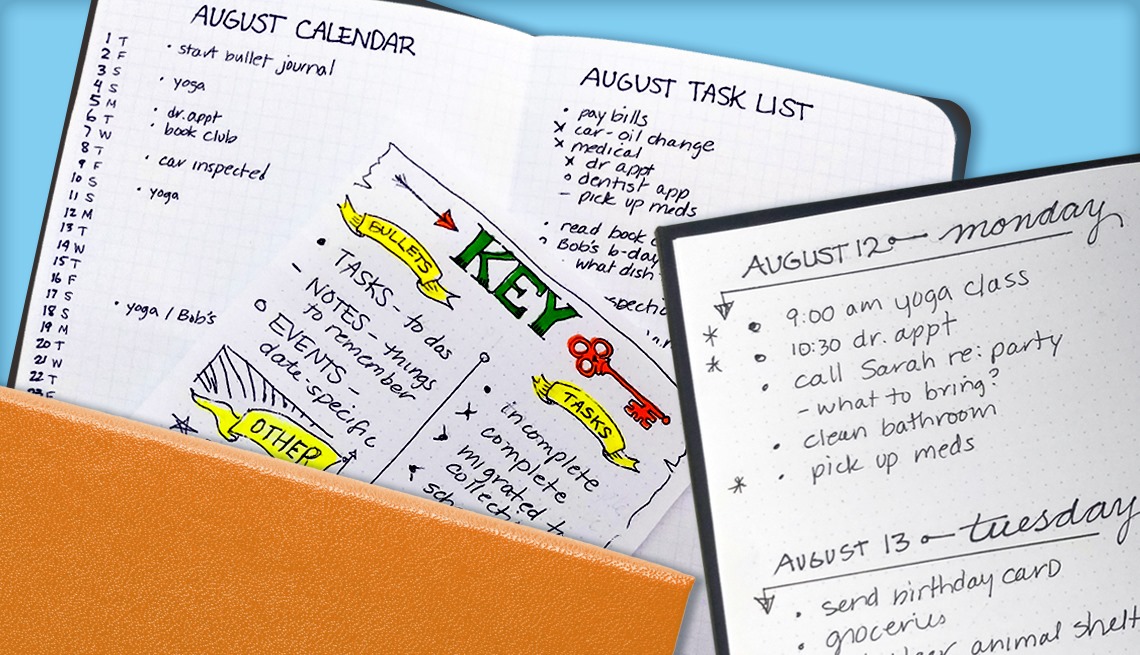
The invention of writing was meant to be for one generation to pass the torch, knowledge onto the next one. But little did we know that writing begat new leverage of human emotions. With the right writing, we can use our human emotions to our advantage. Here is how.
“You don’t start out writing good stuff. You start out writing crap and thinking it’s good stuff, and then gradually you get better at it.”
― Octavia E. Butler
Ideas may sound obvious and even unrealistic in our heads. But wonder it does when we write them on a piece of paper. An idea when thought of in our head, it may have its doubts. But that very idea, when put on a piece of paper, seems more convincing.
Writing down priorities, appointments, deadlines on a piece of paper is a highly celebrated practice by CEOs and important executives.
It is said that once Einstein was asked for his phone number from a colleague, and he started searching for a telephone directory to look up his own phone number! To his amusement the colleague said, “You are considered to be the smartest man in the world and you can’t remember your own phone number!” Einstein simply said, “Why memorize something that you can just look up?”
We overburden our brain by making it remember every single to-do’s we have throughout the day, making it impossible for the brain to think clearly and focus on one thing at a time.
Here is why we should consider writing our priorities down.
1) It declutters our brain enabling us to focus better on the task at hand
2) Every time we get done with a task or priority, we get to cross that off the list which triggers a sense of accomplishment for our brain which hits us with a boost of dopamine.
Dopamine is the hormone of pleasure. And the pursuit of dopamine can be so addicting for our brain that we might be reaching out to the next task on the list right away.
Goals backed up by a C-5 Plan (Compelling-Consistent-Concise-Clear-Committed), can make a huge impact on our subconscious mind. “A goal properly set is halfway reached.” -Zig Ziglar.
A renowned Harvard study of Goal-setting has shown that people who have their goals written somewhere are more likely to reach beyond their goals than those who just think their goals through in head.
“Our goals can only be reached through a vehicle of a plan, in which we must fervently believe, and upon which we must vigorously act. There is no other route to success.”
-Pablo Picasso
Four things promoted by Pablo Picasso. Goals, a plan, belief, and acting accordingly. All of which only comes from consistency. And a written goal with a plan is just that.
“By recording your dreams and goals on paper, you set in motion the process of becoming the person you most want to be. Put your future in good hands—your own.”
-Mark Victor Hansen
“I can shake off everything as I write; my sorrows disappear, my courage is reborn.”
— Anne Frank
We have all seen the affectivity of writing down ideas, priorities, and goals increases as we go. But when it comes to worries, the affectivity of worries diminishes as we write them down. It is because we humans exaggerate the dreads and consequences in our heads way too much. Author and lifestyle analyst Dale Carnegie put this term of worry-busting well in his book How to Stop Worrying and Start Living. He has put forth this anti-worry technique that consists of three easy steps.
Step 1. Estimate what is the worst that can happen.
Step 2. Wholeheartedly, accept the worst and the casualties it begets.
Only then can you move on to Step 3 which is, now that you are okay with the worst casualties, extrapolate ways to minimize them.
Overwhelmed by all the dreads and worries, our first instinct is to lose our rationality and objectivity. Thinking 3 steps and answering them on paper, we get to keep our cool we need at the moment.
Acknowledging and saying the things you are thankful for out loud is a celebrated ritual in almost every culture and religion. Muslims are encouraged to say Alhamdulillah, Americans are required to give an “I’m thankful for…” speech over a toast on Thanksgiving. This practice of being grateful for the existing things we have was originated from our ancestors. Well, they were onto something. Physiologically, the practice of gratitude lowers blood pressure, boosts a hit of dopamine and serotonin, known as Anti-depressant Hormones. Psychologically, it reduces our stress, enabling us to have a sound sleep. It is basically, to borrow a psychologist’s words, the practice of thinking about what you have rather than dwelling on what you don’t. Here is how you can harness the practice of writing gratefulness down on a paper.
1) Think and thank someone on a chit mentioning the things you really appreciate about them
2) Build a Bullet Journal Notebook to write down your small accomplishments
3) Count your blessings on a piece of paper and have it laminated. Recite them every night before you sleep and wait for your subconscious to kick in and do the magic
Now that I wrote these points down, I believe in them even more. This is how it works. Try having a notebook and try today.
Originally published on : https://teenagersbd.com/the_power_of_writing/
In ancient times, humans (the cavemen) needed to be on their toes all the time. Even while sleeping, they couldn’t afford to let their guard down. Otherwise they will be HUNTED OR KILLED BY THE PREDATOR animals.
But a man has got to sleep, to rejuvenate, to be up and about. At the very least, they had to sit and relax.
They built a coping system to be active whenever there is an emergency. To run, or fight , you need energy. Energy comes from ATP. ATP is formed when our food elements are burnt. When we stress, adrenaline is boosted in our brain. Adrenaline is basically the hormone that causes our body’s glucose to burn. With the glucose burnt, ATP (energy) is formed. So as we stress, we are forming energy to GET ON ROLL.
With energy formed, they were prepared for a FIGHT or RUN against any sudden attack. This method of ‘voluntary stress’ worked pretty well for them. Basically they would be like an archer with a cocked arrow.
Since this practice was raised and celebrated among our ancestor humans, this habit of creating and feeling unreasonable stress ingrained in our human DNA.
Long story short : we humans are hardwired to stress.
Ironically, this culture was in the first place brought under then-circumstances. Living in the fear of being devoured as you sleep and so on.
But this culture of stress is UNREASONABLY taking up way too much from us. This was definitely not supposed to be it.

 Know Your Instincts